





DARWIN/ Sabin K Baral-
Households across Australia are beginning to receive their 2026 Census letters, and multicultural leaders in the Northern Territory are using the moment to remind communities that being counted can directly shape the funding and services they receive.

With Census night falling on Tuesday, 11 August 2026, the Australian Bureau of Statistics (ABS) is asking people to watch their mailboxes for instructions on how to complete the count — whether online, on paper, or with in-person help. National spokesperson Emily Walter said support would be widely available, including translated materials and pop-up assistance hubs for people who need it.
Most households will be directed to complete the Census online, though paper forms remain available on request, and some homes will receive one automatically. The ABS estimates the average household will take around 30 minutes to finish the form. Importantly, people no longer need to wait until Census night itself — once instructions arrive, anyone who already knows where they’ll be staying on 11 August can fill it in straight away.
“It captures everyone in Australia”
For Darwin City Councillor and multicultural advocate Dr Edwin Joseph, the stakes go well beyond ticking a box. President of the Multicultural Council of the Northern Territory and Secretary of the Federation of Ethnic Communities Councils of Australia, Dr Joseph has spent more than a decade working with migrant and refugee communities across the Territory — and says one lesson stands out above all others.
“Accurate and reliable data is the foundation for securing support for our communities,” he said. “Before governments, businesses and service providers allocate funding and resources to us, they need to know where we are and what we need.”
He’s keen to correct a common misconception: that the Census only counts citizens or permanent residents.
“It doesn’t just count citizens or permanent residents — it captures everyone in Australia on Census night,” Dr Joseph said. That includes temporary visa holders, international students, visitors, and even a newborn baby — anyone in the country on the night of 11 August must be included, regardless of immigration status.
Why the data matters on the ground
Dr Joseph said Census figures are frequently the starting point for decisions made long before any community consultation begins.
“I have seen firsthand how organisations lean on Census data to understand the community they serve,” he said. “It helps settlement service providers decide on centre locations for new arrivals, and allows early childhood education providers to translate resources for children new to Australia.”
He pointed to rapid demographic shifts in the Territory as proof of why an accurate count matters now more than ever.
“In the past five years alone, we have witnessed wonderful growth within emerging communities like the Latin American and Nepali communities,” he said. Capturing that growth, he added, is how government and service providers know where to adapt as Australia’s population changes.
As a sitting councillor, Dr Joseph also uses the data himself — as a check on what he’s seeing and hearing in the community.
“We need concrete proof points to back our decisions, and Census data plays an important role in validating our community’s lived experience,” he said.
The bottom line
Both the ABS and community leaders are converging on the same message: participation drives outcomes.
“Every answer matters in the Census, because Census data is used to inform decisions about transport, schools, health care, infrastructure and business,” Ms Walter said.
Dr Joseph put it more personally. “When every one of us participates in the Census, we see a full picture of Australia and how it has changed over the years,” he said. “When the data shows a need, the funding and resources can follow.”
Households are urged to check their mailboxes now and complete the Census as soon as instructions arrive. More information for multicultural communities is available at www.census.abs.gov.au/multicultural.
About Dr Edwin Joseph JP
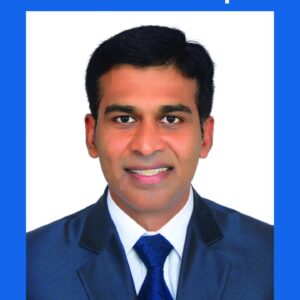
Dr Edwin Joseph JP is President of the Multicultural Council of the Northern Territory, Secretary of the Federation of Ethnic Communities Councils of Australia, Northern Territory Convenor of Religions for Peace Australia, and a Darwin City Councillor. He has advocated for and worked closely with multicultural communities for over a decade since migrating to Australia.
यहाँ प्रकाशित कुनै समाचारमा तपाईंको गुनासो भए हामीलाई info@purakhabar.com मा इमेल गर्न सक्नुहुनेछ । यही इमेलमा तपाईंले आफ्नो विचार वा विश्लेषण, सल्लाह र सुझाव पनि पठाउन सक्नुहुनेछ । हामीसँग तपाईं फेसबुक र ट्विटरमा पनि जोडिन सक्नुहुन्छ । हामीसँग तपाईं
फेसबुक र
ट्विटरमा पनि जोडिन सक्नुहुन्छ ।
Advertisement

यो खबर पढेर तपाईलाई कस्तो महसुस भयो ?
प्रतिक्रिया
सम्बन्धित खवर
अषोज २४, २०८३ शनिबार
65 Views
अषोज २४, २०८३ शनिबार
93 Views

अषोज १७, २०८३ शनिबार
154 Views


अषोज १७, २०८३ शनिबार
103 Views